
PARTICIPATORY DEFENSE
Supporting Black Mothers, Families & Communities in Delaware
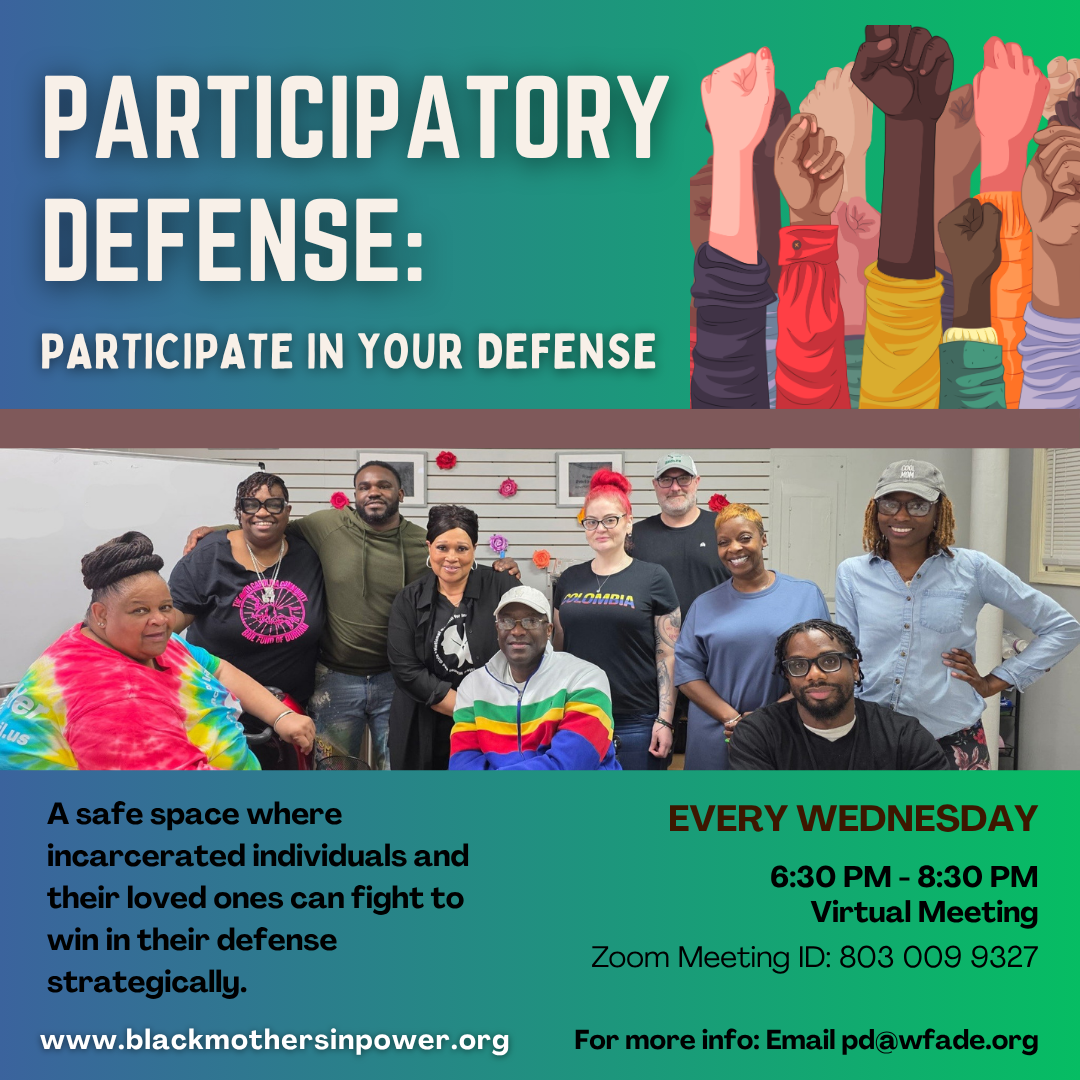
You Don't Have to Navigate the Legal System Alone.
Black Mothers In Power (BMIP), in partnership with A Woman's Worth Project (AWWP) and Wilmington Freedom Alliance (WFA), provides Participatory Defense support to individuals and families navigating Delaware's criminal legal system.
Participatory Defense brings families and communities together to better understand the legal process, prepare for court, advocate alongside defense attorneys, and support loved ones throughout their case.
We believe families should have knowledge, support, and a voice throughout the legal process.

What Is Participatory Defense?
Participatory Defense is a community-based approach to supporting people facing criminal charges and their families.
The criminal legal system can be confusing and overwhelming. Families often have questions about court proceedings, attorneys, bail, incarceration, and what they can do to support their loved one.
Participatory Defense helps families become active participants in the defense process.
Our team works alongside individuals and families to help them:
Better understand the court process
Prepare for upcoming court dates
Prepare questions for attorneys and public defenders
Develop social biographies that show the whole person - not just the charges against them
Gather letters of support and other helpful materials
Organize information for the defense team
Prepare for and attend Participatory Defense meetings
Navigate community resources and family needs
Prepare for reentry when a loved one is incarcerated
Advocate for themselves and their families throughout the process
We do not replace your attorney. We help you become more informed, prepared, organized, and supported throughout the process.
How Participatory Defense Works
-
Complete our Participatory Defense Support Request form and tell us about the case, upcoming court dates, and the support you need.
-
A member of the Participatory Defense team will review the request and connect with you to learn more about what's happening.
-
Every case and family is different. Together, we identify ways the individual, family, and community can support the defense process.
This might include preparing for court, creating a social biography, gathering letters of support, identifying family needs, preparing questions for an attorney, or connecting to community resources.
-
Participatory Defense is not just about one court date. When appropriate, we continue working alongside families as the case moves through the legal system.

More Than a Case Number
When someone enters the criminal legal system, prosecutors, judges, and even defense attorneys may know very little about the person beyond what appears in a police report or court file.
But people are more than the worst allegation made against them.
They are mothers. Parents. Caregivers. Workers. Students. Neighbors. Community members. People with families who depend on them.
Participatory Defense helps families tell the full story of who their loved one is.
Through social biographies, letters of support, family participation, and other defense strategies, families can help ensure that the person - not simply the charge - is visible throughout the legal process.
Support for Families
An arrest or incarceration doesn't affect only one person.
Children may suddenly lose a caregiver. Families may lose income. Someone may be at risk of losing their job or housing. Parents may struggle to understand what is happening in court or how to communicate with an attorney.
Our Participatory Defense work recognizes these realities.
When possible, we help connect families to resources and support related to:
Family and caregiving needs
Housing and basic necessities
Transportation
Pregnancy and parenting needs
Re-entry
Community resources
Other needs resulting from incarceration or court involvement

What About Bail?
Financial bail assistance is not a standalone BMIP program.
In limited circumstances, financial assistance with bail may be considered as one tool within a broader Participatory Defense strategy.
Whether bail assistance is available depends on the individual case, program criteria, available funding, and other circumstances that may affect the person's release.
Submitting a Participatory Defense Support Request does not guarantee bail assistance or any other financial assistance.
You do not need to submit a separate bail application. If someone is currently incarcerated, provide their bail information on the Participatory Defense Support Request form. Our team will review it as part of the overall case.
Who Can Request Support?
You may request Participatory Defense support for yourself or someone you care about.
Our work centers Black people and families impacted by the criminal legal system, including Black mothers, pregnant people, parents and caregivers, and Black Trans people.
Services are currently available to Delaware residents.
A family member, partner, friend, advocate, or community member may also submit a request on someone's behalf.
Our Partnership

Participatory Defense is a collaborative effort between:
Black Mothers In Power (BMIP)
A Woman's Worth Project (AWWP)
Wilmington Freedom Alliance (WFA)
BMIP is also connected to the National Participatory Defense Network, joining communities across the country that are organizing families to participate meaningfully in the defense of their loved ones.
This is community defense.
This is families having a voice.
This is communities standing beside our people when they need us most.

Need Support?
If you or someone you know is navigating a criminal case in Delaware, you don't have to figure everything out alone.
Complete our Participatory Defense Support Request to tell us what's happening and how we may be able to support you.
Submitting a request does not guarantee services, financial assistance, bail assistance, or legal representation. Participatory Defense does not provide legal representation or replace the advice of an attorney or public defender.
Want to Support This Work?
Participatory Defense depends on community power.
Your support helps us organize families, provide court navigation and community-based support, develop defense materials, connect families to resources, and respond to the needs of people impacted by the criminal legal system.